Rising dramatically from the rear wall of Palazzo Poli, the Trevi Fountain has commanded the heart of Rome for centuries, channeling ancient waters through one of the world's most breathtaking works of art. Behind every coin tossed into its shimmering basin lies a story stretching back more than two thousand years, woven from myth, ambition, and genius.
The story of the Trevi Fountain begins not with marble and sculpture, but with water engineering on a grand Roman scale. In 19 BC, the Roman general and statesman Marcus Agrippa commissioned the Aqua Virgo, one of ancient Rome's eleven major aqueducts, to supply water to the newly built Thermae Agrippae — his lavish public baths near the Pantheon. Stretching approximately 21 kilometres from a spring in the hills east of Rome, the Aqua Virgo was celebrated for delivering exceptionally pure, cool water into the city's heart. According to legend, a young virgin girl revealed the spring's location to thirsty Roman soldiers, giving the aqueduct its evocative name and the fountain its enduring romantic mythology.
Remarkably, the Aqua Virgo continued functioning almost uninterrupted through the fall of the Western Roman Empire, surviving where most other aqueducts crumbled or were deliberately sabotaged during the Gothic Wars of the 6th century. By the early medieval period, where the aqueduct terminated in the Trevi district — named after the Latin 'trivium,' meaning the junction of three roads — a modest stone basin collected water for local residents and livestock. Pope Nicholas V recognised the site's potential in 1453, commissioning the architect Leon Battista Alberti to restore the aqueduct and build a simple, dignified fountain at its terminal point, laying the first architectural foundations for what would become a global icon.
The transformation from functional basin to world-famous monument was neither swift nor straightforward. Pope Urban VIII Barberini reignited ambitions for a grand terminal fountain in the 1620s, famously commissioning Gian Lorenzo Bernini — the towering genius of Roman Baroque — to draft new designs. Bernini relocated a column from the nearby church of Santi Apostoli to test his spatial concepts, but the project collapsed when Urban VIII died in 1644. Funds evaporated, political winds shifted, and Bernini's vision was shelved. For nearly a century, Rome's grandest hydraulic ambition sat unrealised, a peculiar gap in a city otherwise overflowing with monumental fountains, many of them masterworks by Bernini himself.
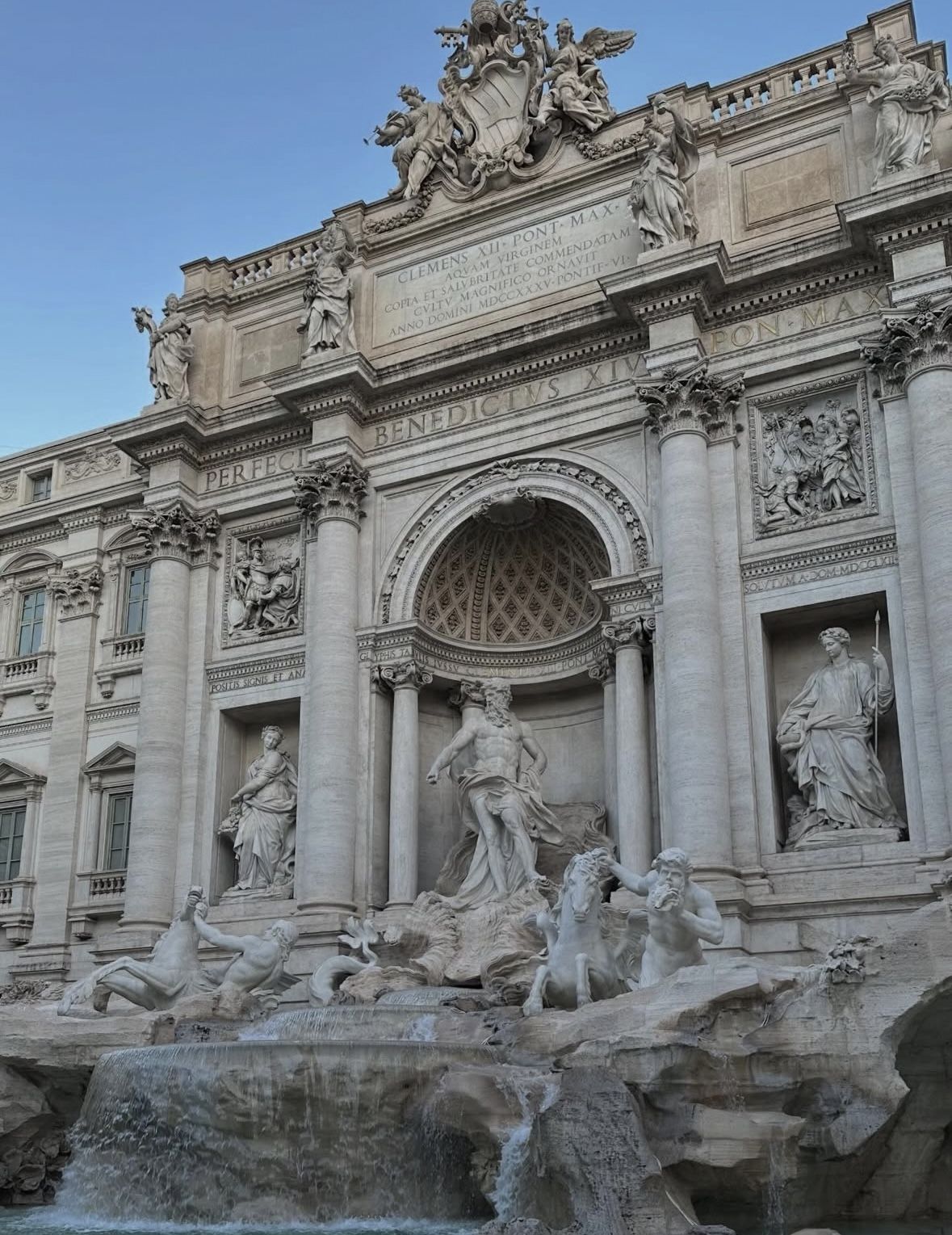
The breakthrough came under Pope Clement XII, who in 1730 held a competition to finally design the definitive fountain. The commission ultimately went to Roman architect Nicola Salvi, who beat out rivals including the Florentine Alessandro Galilei. Salvi's genius lay in treating the entire facade of Palazzo Poli as the fountain's backdrop — a theatrical stage on which Neptune and his marine entourage could preside in eternal triumph. Work began in 1732, and Salvi devoted the rest of his life to the project, dying in 1751 before its completion. He is said to have hidden a sculpted urn behind a column to block the view of a barber who had loudly criticised the design — a petty but immortal act of artistic revenge.
Following Salvi's death, architect Giuseppe Pannini oversaw the fountain's completion, making modest adjustments to the upper reliefs and statuary. Pope Clement XIII inaugurated the finished Trevi Fountain on 22 May 1762, three decades after construction began. The central figure of Oceanus — god of all the world's waters — rides a shell-shaped chariot pulled by two sea horses, one calm and one wild, representing the sea's dual nature. Flanking him are allegorical statues of Abundance and Salubrity, while the relief panels above depict Agrippa approving the aqueduct's plans and the legendary virgin revealing the spring. Every sculptural choice reinforces the fountain's dual identity as both a hymn to water and a monument to Roman imperial power.
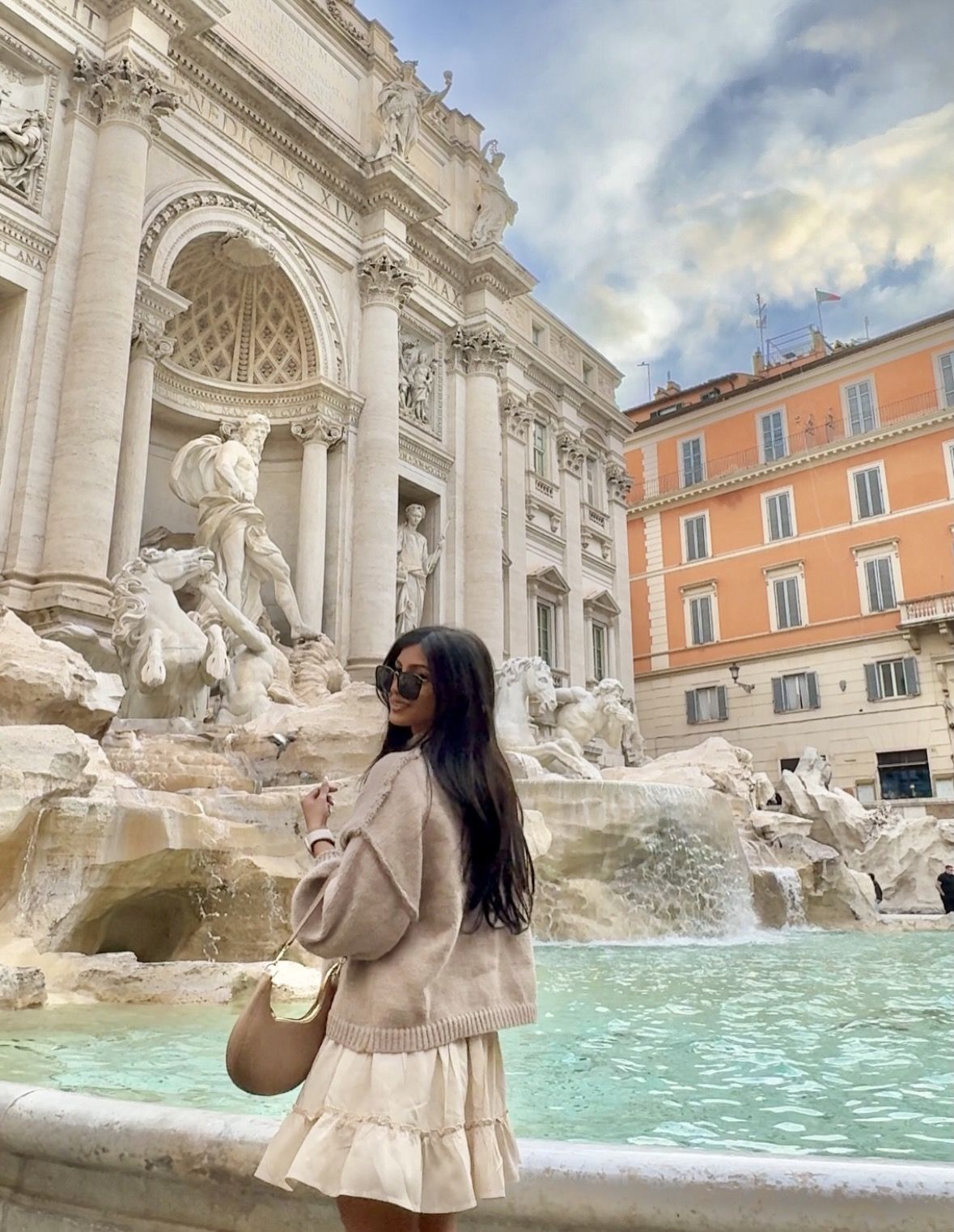
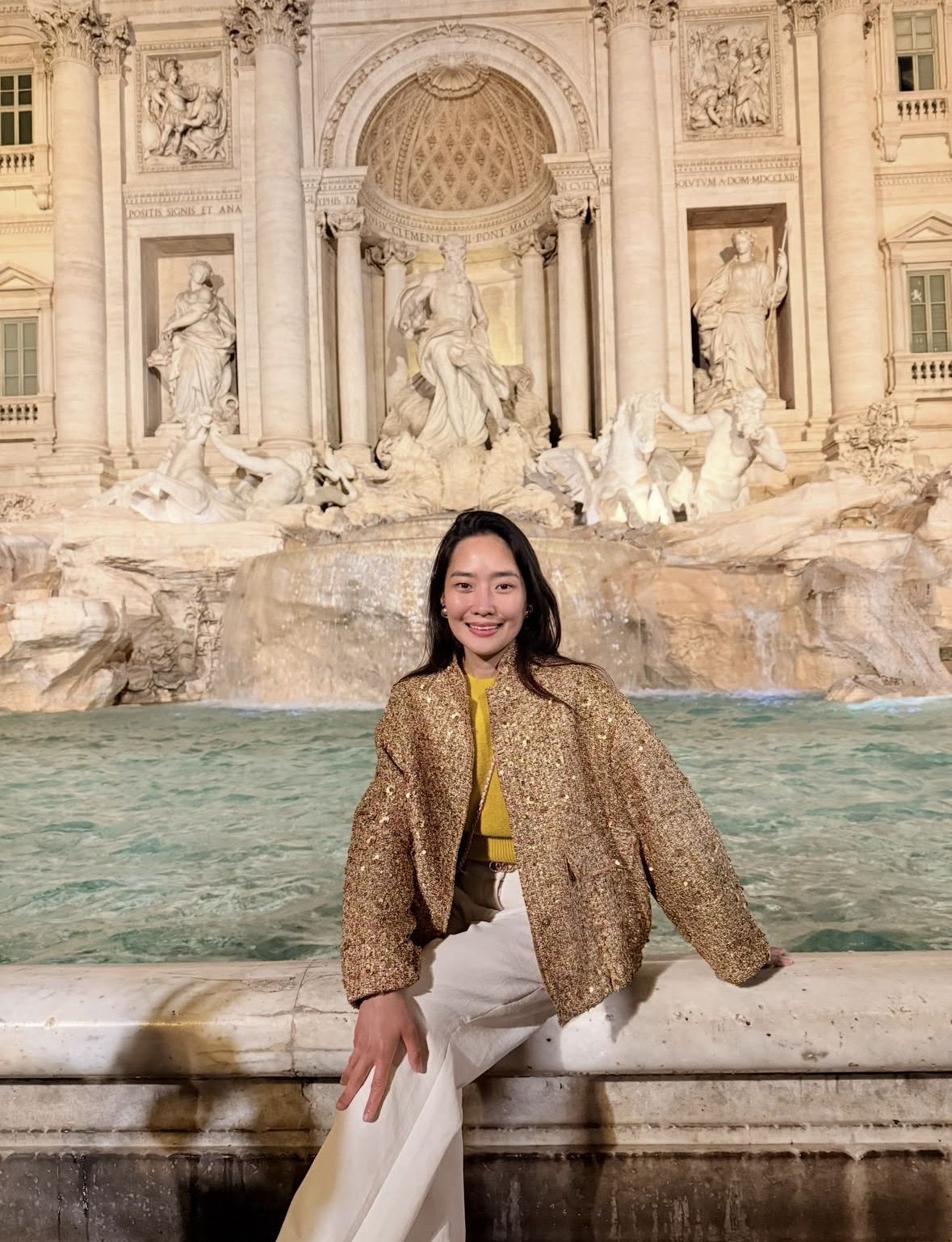
The Trevi Fountain's leap from beloved Roman landmark to global cultural icon was accelerated dramatically by the golden age of cinema. Federico Fellini's 1960 masterpiece 'La Dolce Vita' immortalised the fountain in its most famous scene, in which Anita Ekberg wades through the illuminated basin in an evening gown while Marcello Mastroianni looks on, transfixed. The scene encapsulated Rome's postwar renaissance — glamorous, hedonistic, and achingly beautiful — and broadcast the fountain's image to audiences worldwide. Audrey Hepburn's 1953 film 'Roman Holiday' had already introduced the fountain to American audiences, cementing its reputation as the essential symbol of romantic Rome long before social media existed.
Central to the fountain's modern mythology is the coin-tossing tradition, which holds that throwing a coin over your left shoulder with your right hand into the fountain guarantees a return to Rome. The custom is often traced to ancient Roman practices of making offerings to water deities, though its modern form was popularised in part by the 1954 film 'Three Coins in the Fountain,' whose Academy Award-winning title song became a global hit. Today, roughly 3,000 euros worth of coins are tossed into the basin every single day. Since 2001, the Roman Catholic charity Caritas has been officially authorised to collect the coins — typically netting over one million euros annually to fund food programmes and social services for Rome's poor.
The fountain underwent a significant and controversial restoration between 2014 and 2015, funded by the Italian fashion house Fendi to the tune of 2.18 million euros as part of their broader support for Roman heritage under the 'Fendi for Fountains' initiative. Workers cleaned centuries of grime from the travertine stone, repaired cracks and erosion, replaced aging pipe infrastructure, and improved the water filtration and circulation systems. The restoration sparked public debate about private sponsorship of public monuments and what obligations such arrangements create, but the results were undeniable: the fountain emerged whiter, sharper, and more luminous than it had appeared in living memory, with the fine sculptural details of Salvi's vision newly legible from across the piazza.
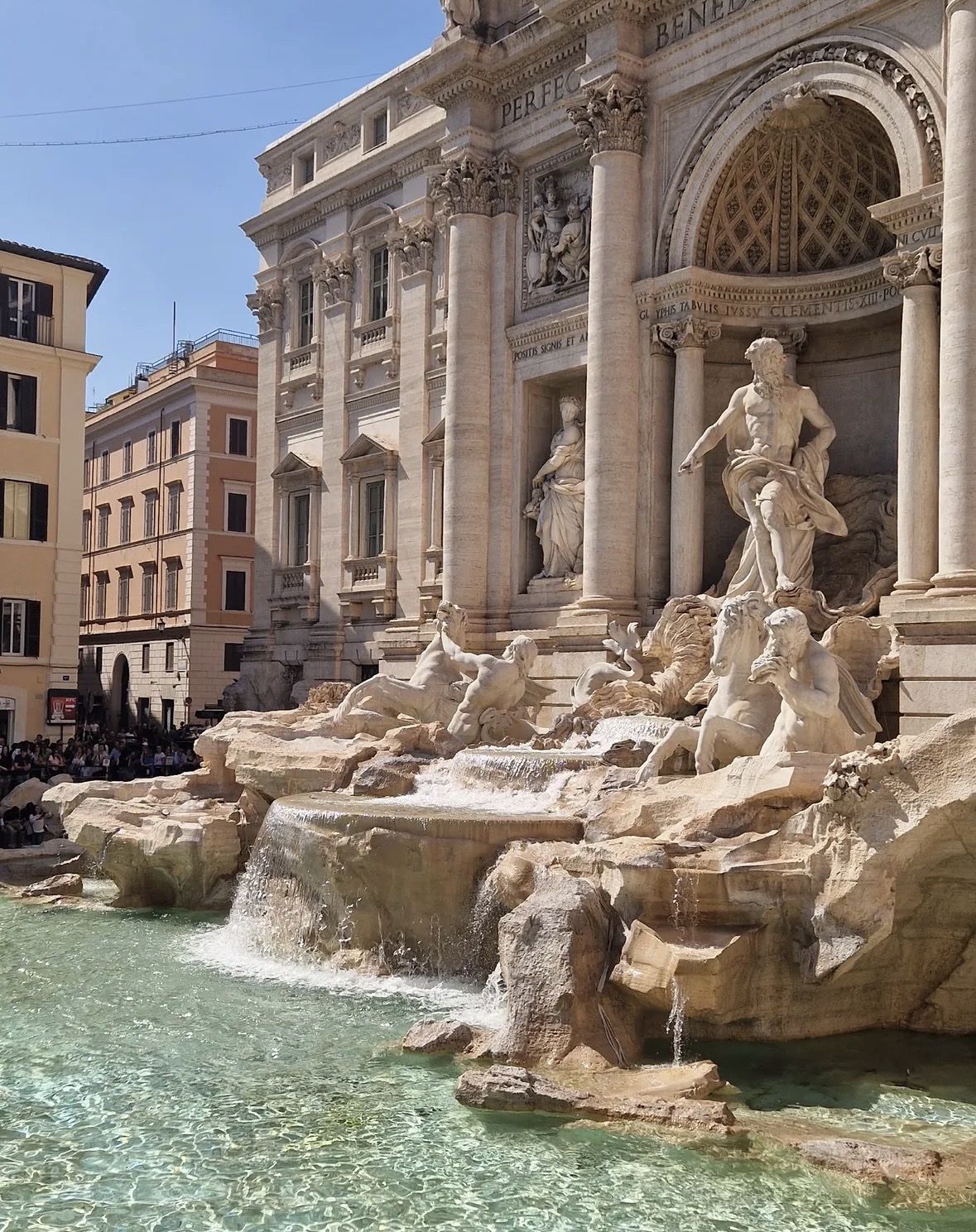
Today, the Trevi Fountain attracts an estimated 10 to 15 million visitors annually, making it one of the most visited sites not just in Rome, but in the entire world. The small Piazza di Trevi that surrounds it is perpetually crowded from dawn to well past midnight, buzzing with the mingled sounds of a dozen languages, clicking cameras, and the constant, soothing roar of 80,000 cubic metres of water cascading through the basin each day. In recent years, Rome's city government has introduced measures to manage the crowds and protect the monument, including a ban on sitting on the fountain's steps — enforced with fines of up to 450 euros — and periodic closures of the perimeter for cleaning and safety.
Visiting the Trevi Fountain remains one of travel's singular experiences — a moment where art history, mythology, cinema, and the sheer physical drama of water and stone converge in a narrow Roman piazza. Whether you arrive at noon in summer's full chaos or steal away at 5 a.m. to find it glowing in solitary splendour under the streetlights, the fountain rewards every encounter with something new. Millions have stood where you are standing, from Renaissance popes to Hollywood legends, from 18th-century Grand Tour travellers to modern backpackers, and all have felt the same pull. Close your eyes, flip that coin over your shoulder, and let Rome promise you it will happen again.
Ready to Experience It Yourself?
A guided tour of the Trevi Fountain and Rome's historic centre transforms a sightseeing stop into a genuinely unforgettable experience, with expert local guides revealing the myths, artistic secrets, and hidden details that most visitors walk right past. From skip-the-crowd evening tours to immersive Baroque Rome itineraries, there is a perfect experience for every traveller and every budget. Browse our handpicked selection of top-rated Trevi Fountain tours and book your place in one of history's greatest stories today.
Book Your Tour Now